Teaching Evidence & Service-Learning 11 Award-Winning Projects

Classroom Projects with Real Social Impact

Each of these projects proves that technology finds true meaning when placed in service of those who need it most: pediatric hospital wards, people with disabilities, family digital well-being, open technical sovereignty, and community sustainability.

Official Atresmedia Foundation Video · Finalist Candidacy Mentes AMI Awards 2026

Video showing student team & real working prototype
More Life, Less Social Media

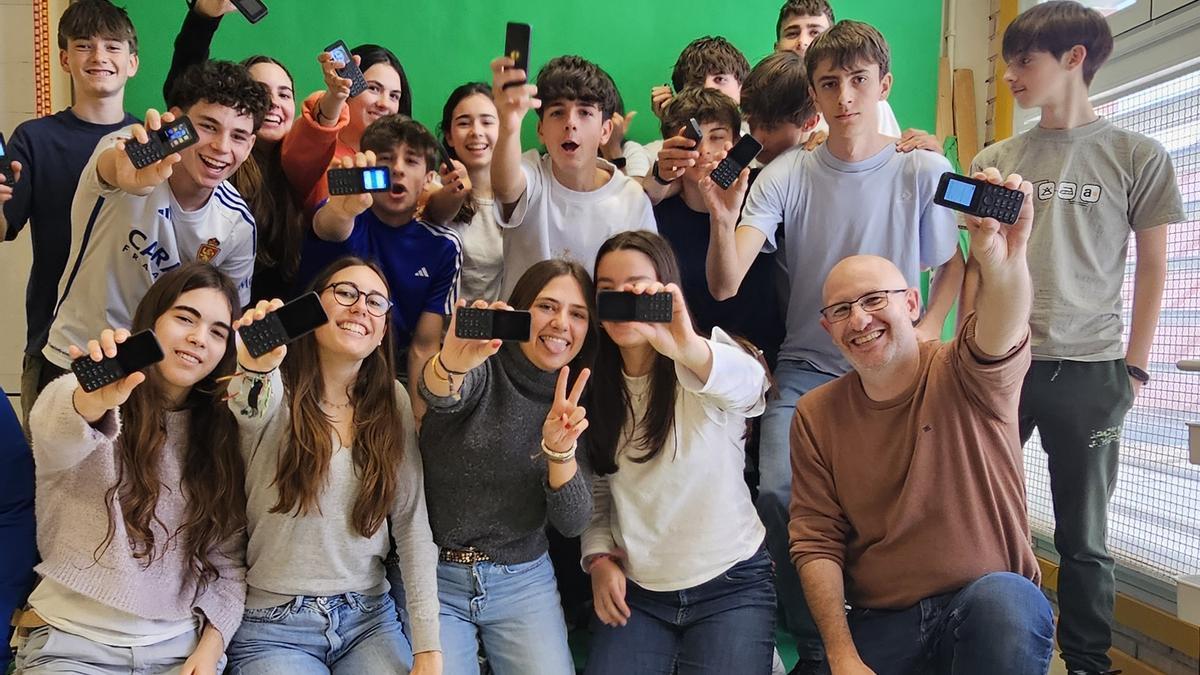
📸 Students and families taking part in the voluntary digital disconnection challenge

Personal Sustainability & Digital Well-Being Mentes AMI Awards: Top 3 National Finalist 2026 (Winner 2025)

More Life, Less Social Media

Pioneering voluntary digital disconnection challenge, adolescent mental health & the pedagogy of time

Born out of growing concern over compulsive screen usage, algorithmic attention capture, and its documented impact on adolescent mental health. For one full week, students voluntarily replace their smartphones with basic keypad "dumbphones" (provided by EMBOU), eliminating all social media apps, instant messaging, and invasive notifications. Through a Service-Learning (S-L) approach, older students mentor younger primary school students and their families to prevent the premature delivery of a first smartphone.

Impact Evidence & Methodology:

  • ▪ 92% voluntary participation across the secondary grade levels, with 83% successfully completing the full challenge.
  • ▪ 70% measurable improvement in reported sleep quality, concentration span, and reduction of baseline anxiety levels.
  • ▪ Re-activation of face-to-face family conversations, long-form reading, musical practice, and offline sports.
  • ▪ Selected as one of the 3 national finalists across Spain in the Mentes AMI Awards 2026 (Atresmedia & Mutua Madrileña Foundations).
  • ▪ Zaragoza City Council, through CMAPA, is actively piloting the program to scale it across all public and charter schools in the city.
  • ▪ Scientific research publication in the peer-reviewed ENLACE Journal (Aragonese Association of Psychopedagogy, Sept. 2026) alongside extensive broadcast coverage on Cadena SER, Aragón TV, and national press.
Video showing student team & real working prototype

Sustainability & Social Inclusion (Hospital Service-Learning) 1st National Prize CoTEDI Challenge (Computational Thinking)

Project I’M: Tomorrow's Innovators

“From MakerSpace to Service: Designing an inclusive robotics kit for Miguel Servet Children's Hospital”

The highest expression of Service-Learning (S-L) in educational robotics. Secondary students (Lilian, Hugo, Regina, and Isabel) didn't merely learn 3D modeling, coding, and electronics; they designed, engineered, and manufactured an accessible robotics kit specifically tailored for long-term pediatric hospital patients at Miguel Servet Children's Hospital in Zaragoza, aiding their emotional recovery through purposeful play.

Impact Evidence & Methodology:

  • ▪ 100% accessible kit featuring oversized tactile pushbuttons, adapted joysticks, and safe washable materials.
  • ▪ Pedagogical integration with interactive storytelling and dynamic challenges designed for bedside hospital stays.
  • ▪ Awarded First National Prize in the Spanish CoTEDI Challenge for computational thinking with transformative social impact.
  • ▪ Working prototype fully validated and presented directly by the student engineering team.

Video showing student team & real working prototype

Sustainability & Social Inclusion (Health & Dignity) Regional Winner of the National Future Minds Competition 2025

Project StayDry: Intelligence in the Service of Dignity

Non-invasive smart monitoring for preventive care and well-being in severe disability

StayDry emerged from the observation and deep empathy of a student team (Daniel, Pedro, Azucena, Josefina, Daniel, and Aitor) toward an invisible social reality: loss of personal autonomy and severe dermatological complications arising from delayed diaper changes in individuals with severe motor disabilities or incontinence. They engineered a discreet, non-invasive smart sensor alerting caregivers in real time while safeguarding 100% of user dignity and privacy.

Impact Evidence & Methodology:

  • ▪ Immediate moisture and temperature detection powered by ultra-low-power microcontrollers.
  • ▪ Discreet wireless alerts to caregivers, preventing pressure ulcers and avoidable hospitalizations.
  • ▪ Prototype rigorously tested under strict usability, user-centered design, and safety guidelines.
  • ▪ Crowned Regional Winner in the National Future Minds 2025 Competition.

Video showing student team & real working prototype

Accessible Parking Enforcement (PMR)

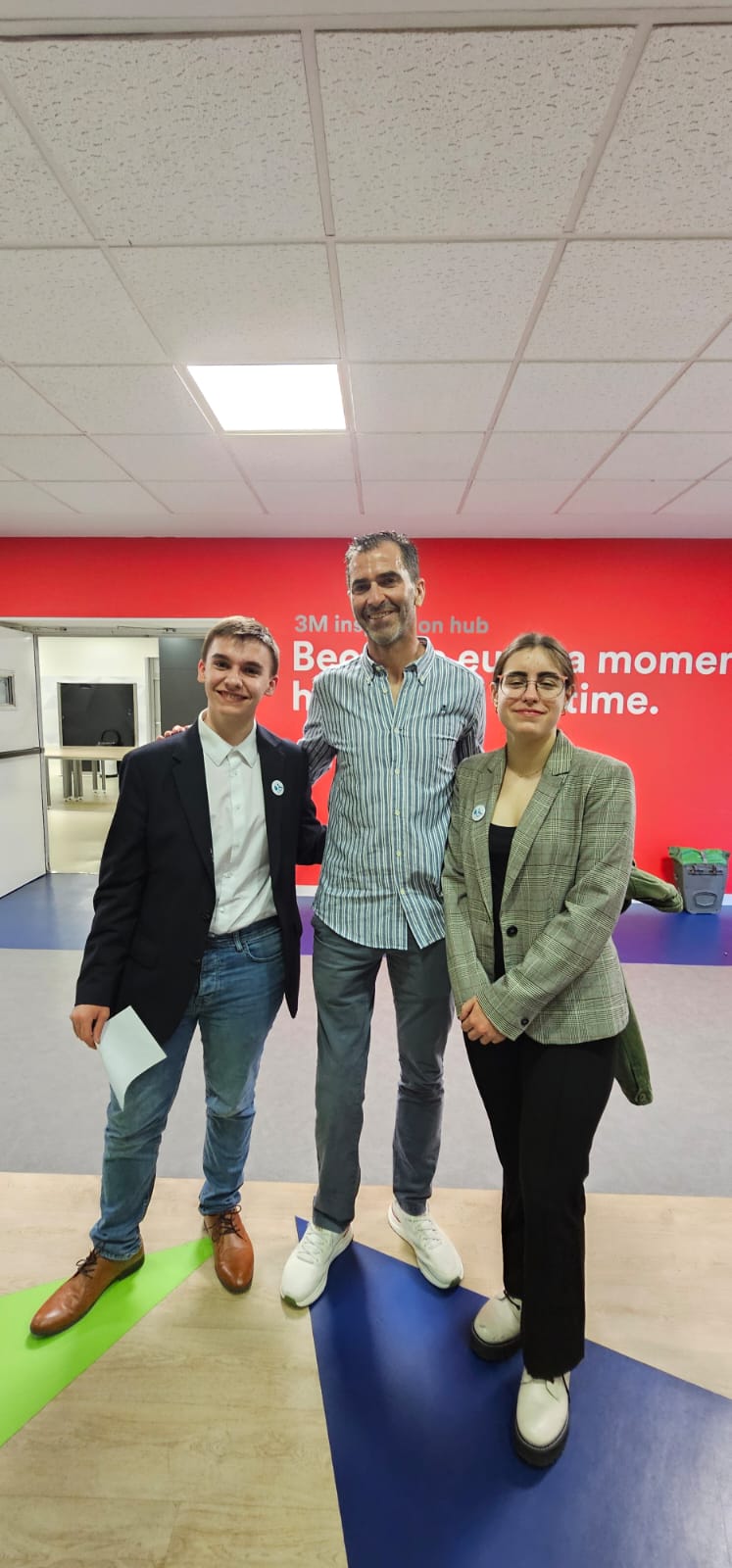
📸 Student nominees at the 3M National Innovation Awards alongside Paralympic champion Dani Molina

Sustainability & Social Inclusion (Smart Cities) 3M National Innovation Awards Nomination · Endorsed by Paralympic Champion Dani Molina

Accessible Parking Enforcement (PMR)

IoT sensors and computer vision safeguarding designated parking spots for people with reduced mobility

Addressing one of the most frustrating daily barriers to independent living: the unlawful occupation of parking bays reserved for Persons with Reduced Mobility (PMR). Students (Hugo and Isabel) engineered an IoT sensor network that detects unauthorized vehicle occupancy in real time and triggers automated warnings to guarantee these critical spaces remain accessible to those who need them. The project was nominated nationally at the 3M Educational Innovation Awards and publicly championed by World and Paralympic triathlon champion Dani Molina.

Impact Evidence & Methodology:

  • ▪ Real-time IoT sensing and automated notification system connected to municipal community networks.
  • ▪ Fosters civic responsibility, universal accessibility awareness, and respect for accessible urban infrastructure.
  • ▪ National finalist at the prestigious 3M Educational Innovation Awards.
  • ▪ Public commendation and support from Paralympic champion Dani Molina for its tangible impact on civic inclusion.
Sustainability & Social Inclusion (Sensory Autonomy) 1st Prize Apps · 1st Prize Multimedia · Best Advisor (Aragon Computer Science Olympiad)

Smart Cane for the Visually Impaired

Sensory augmentation using ultrasonic ranging and graded haptic feedback

Developed directly from real-world feedback collected within the disability community. The goal was to enhance the traditional white cane with advanced spatial sensing without adding cumbersome weight or modifying its natural ergonomics, detecting aerial hazards (low tree branches, construction scaffolding, truck wing mirrors) that floor sweeping cannot catch.

Impact Evidence & Methodology:

  • ▪ Ultrasonic range sensors calibrated for obstacle detection at torso and head level.
  • ▪ Immediate graduated haptic vibration feedback proportionally alerting the user to incoming danger.
  • ▪ Lightweight, low-cost design implemented with open-source microcontroller boards.
  • ▪ Triple award winner at the Aragon Computer Science Olympiad: 1st Prize Apps, 1st Prize Multimedia, and Special Jury Distinction.

Video showing student team & real working prototype

Sustainability & Social Inclusion (Accessible Communication) Inclusive Technology & Digital Sovereignty

Accessible Telegram Voice Communicator

Connecting generations at the touch of a button for seniors and people with severe motor impairment

Born of years working alongside people with complex physical and cognitive disabilities, where standard smartphones with tiny touchscreens, touch targets, and nested menus create frustration and social isolation. The device features a single oversized ergonomic arcade button connected to an ESP32 microcontroller, enabling seamless bidirectional voice messages with family Telegram channels without ever needing to look at or swipe a screen.

Impact Evidence & Methodology:

  • ▪ Ultra-simplified user interface: hold to speak, release to send immediately to the family Telegram group.
  • ▪ Empowers individuals with tremors, severe vision impairment, or partial paralysis to stay in daily contact with loved ones.
  • ▪ Low-cost, secure, open hardware that is easily deployed in nursing homes, assisted living facilities, and private homes.

Video showing student team & real working prototype

Sustainability & Social Inclusion (Hospital Service-Learning) Service-Learning Initiative with Full Press Feature

Stories in the Air (Cuentos en el Aire)

Digital walkie-talkies and interactive live storytelling for hospitalized pediatric patients

“Stories in the air” was built on a foundational belief: technology finds its true meaning when placed in service of human emotional comfort. Students programmed digital audio transmitters (educational walkie-talkies) and wrote interactive adventure tales that they narrated live into hospital rooms at Miguel Servet Children's Hospital in Zaragoza, turning sterile wards into worlds of imagination, friendship, and shared laughter.

Impact Evidence & Methodology:

  • ▪ Cultivates active empathy, verbal storytelling, and creative writing among participating students.
  • ▪ Brings comfort, distraction, and authentic human warmth to children facing prolonged hospital isolation.
  • ▪ Secure wireless communications built on pedagogical and ethical standards.
  • ▪ Full investigative feature in El Periódico de Aragón: “When learning also means helping: stories to Miguel Servet Hospital”.

Video showing student team & real working prototype

Environmental Sustainability & Artificial Intelligence RetoTech Endesa Foundation National Award

Automated AI Waste Sorting Station

Real-time waste classification powered by embedded computer vision and physical robotics

An advanced recycling system where secondary students are not merely passive consumers of AI, but its active creators. Students gathered and labeled custom image datasets of different plastics and recyclable materials, trained convolutional neural networks, examined confusion matrices and confidence thresholds, and hooked up wireless edge inference to a physical microcontroller that actuates mechanical sorting gates in real time.

Impact Evidence & Methodology:

  • ▪ Hands-on practical AI literacy (classification, edge inference, confusion matrices) rather than purely generative AI.
  • ▪ Seamless integration of custom hardware, computer vision, wireless sockets, and servo actuators.
  • ▪ Awarded the National Prize at the prestigious RetoTech Endesa Foundation Awards.
  • ▪ Showcased as an educational success case at the CSIC & ”la Caixa” Foundation Teacher Summer Academy.

Video showing student team & real working prototype

Environmental Sustainability, History & Heritage Teacher of Aragon Award (RetoTech Endesa Foundation 2021)

STEAM Flea Circus: Automata & Empathy

From historical exploitation to ethical homage: mechanical automata recreation

Far more than a showcase of mechanical prowess: a multidisciplinary lesson linking 19th-century history, animal empathy, and technological humanism. Students deconstructed historical traveling flea circuses, transforming a legacy of animal exploitation into an ethical mechanical tribute. The team designed miniature theaters with crank-and-connecting-rod mechanisms, electromagnets, and micro-servos programmed to recreate acrobatic feats with clockwork precision.

Impact Evidence & Methodology:

  • ▪ Interdisciplinary fusion of History, Literature, Classical Mechanics, and Embedded Programming.
  • ▪ End-to-end digital fabrication in our school MakerSpace (laser cutting, 3D printing, custom circuit boards).
  • ▪ Honored with the Teacher of Aragon Award in RetoTech Endesa Foundation.
  • ▪ Delighted audiences across generations, demonstrating that engineering can tell stories with heart.
MagicSTEAM Platform

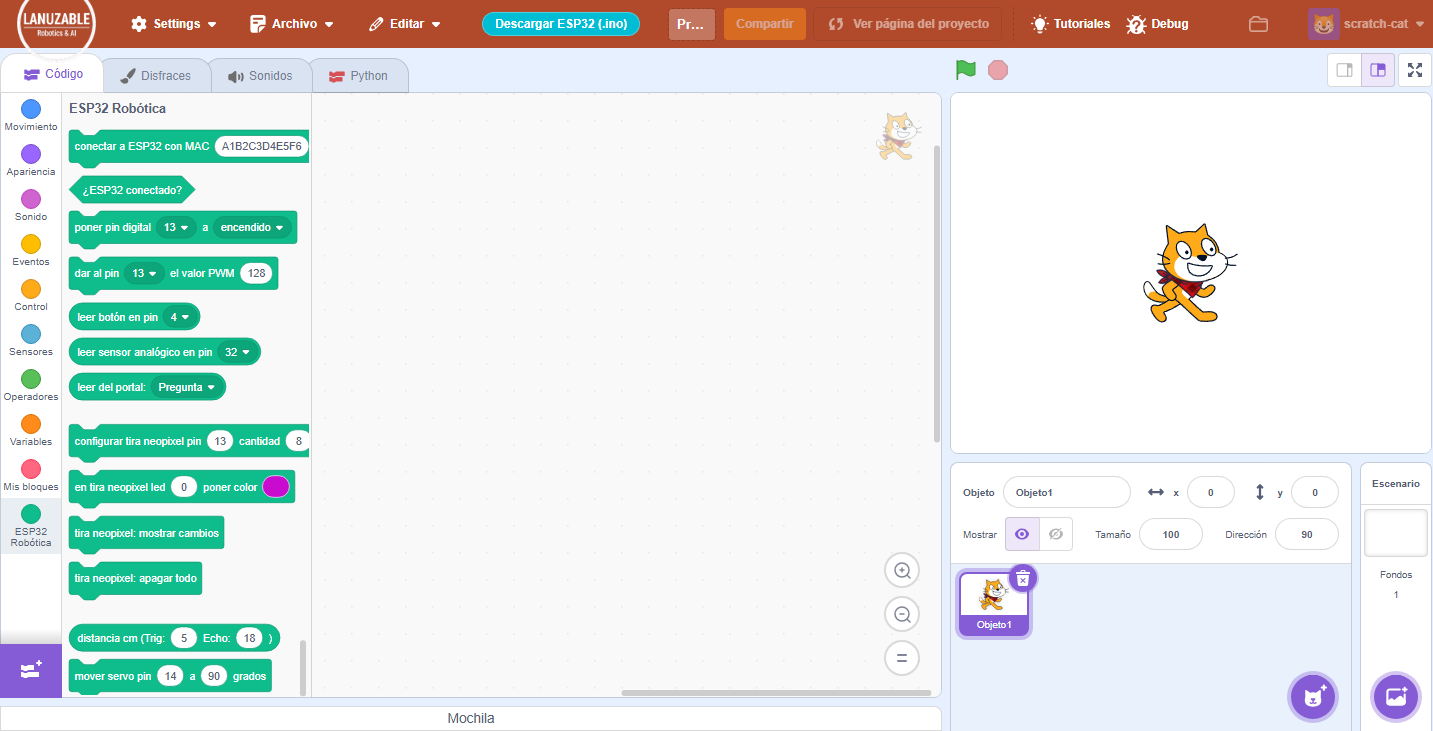
📸 Open-source software: Scratch enhanced with IoT, AI extensions, and native ESP32 blocks

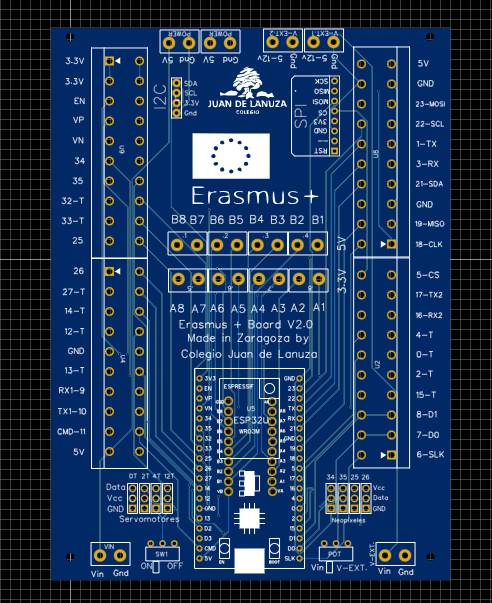
Hardware: Custom Erasmus+ educational PCB shield for plug-and-play sensor wiring

🔌 Hardware: Custom Erasmus+ educational PCB shield for plug-and-play sensor wiring

Technological Sovereignty & Open Educational Software Open Source & Public Educational Service

MagicSTEAM Platform

Breaking the 4th digital wall: accessible physical computing platform based on Scratch & ESP32

Co-developed with Pepe Fernández. An enriched, accessible adaptation of Scratch designed so that any student or educator—regardless of prior coding knowledge or cognitive diversity—can write code that interacts with ESP32 microcontrollers, artificial intelligence, and physical sensors in real time without driver friction.

Impact Evidence & Methodology:

  • ▪ 100% free, open-source access for schools, technical institutes, and community inclusion centers.
  • ▪ Native wireless connection with ESP32 boards via Wi-Fi/Bluetooth without installing complex serial drivers.
  • ▪ Custom Erasmus+ educational PCB shield engineered for safe, intuitive sensor and actuator connectivity.
  • ▪ Philosophy of digital sovereignty, eliminating proprietary paywalls and costly per-seat subscriptions.
ZierzO2: Community Open CO2 Monitor
Citizen Science & Open Hardware Public Health Impact & Scientific Outreach

ZierzO2: Community Open CO2 Monitor

Citizen science, open hardware, and public classroom health in response to COVID-19

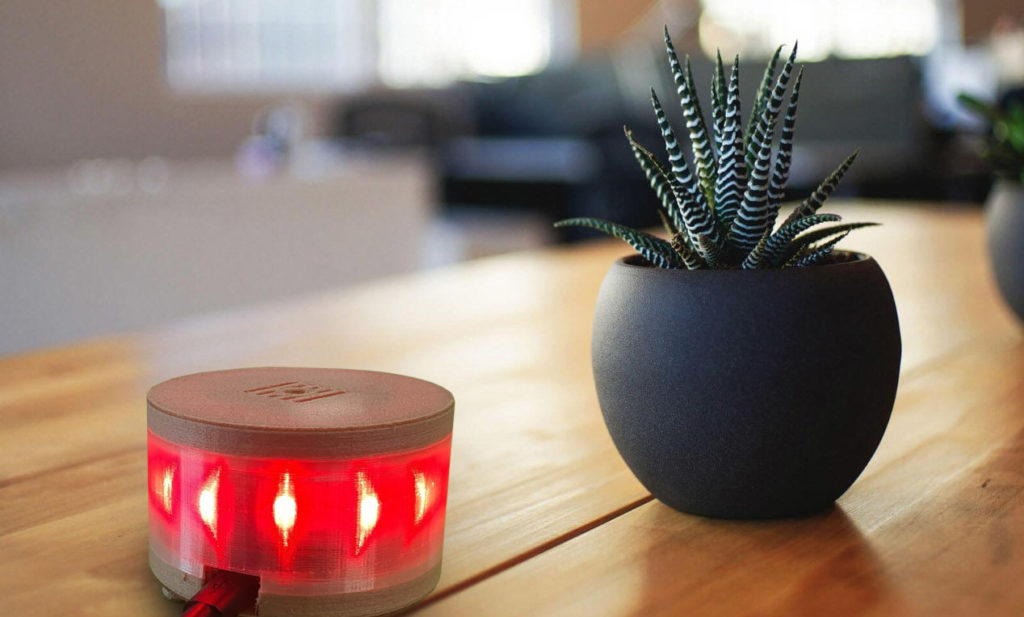
Designed and manufactured as an urgent grassroots response to the COVID-19 pandemic: an open-source CO2 monitor based on high-precision NDIR optical sensors and affordable microcontrollers. Teachers and students used it to measure classroom indoor air quality in real time, timing window ventilation precisely to prevent airborne transmission without freezing students in winter.

Impact Evidence & Methodology:

  • ▪ Grassroots collaborative development in Aragon with open assembly schematics and blueprints shared freely.
  • ▪ Real-time monitoring featuring intuitive configurable LED color thresholds and audible alerts.
  • ▪ Adopted by dozens of public classrooms and widely celebrated across regional news media.