
MagicSTEAM: Coding, Hardware, and Connected Reality
An educational initiative developed by Ricardo Aguado and Pepe Fernández to transform existing classroom activities into tangible, immersive experiences seamlessly connected with physical reality.
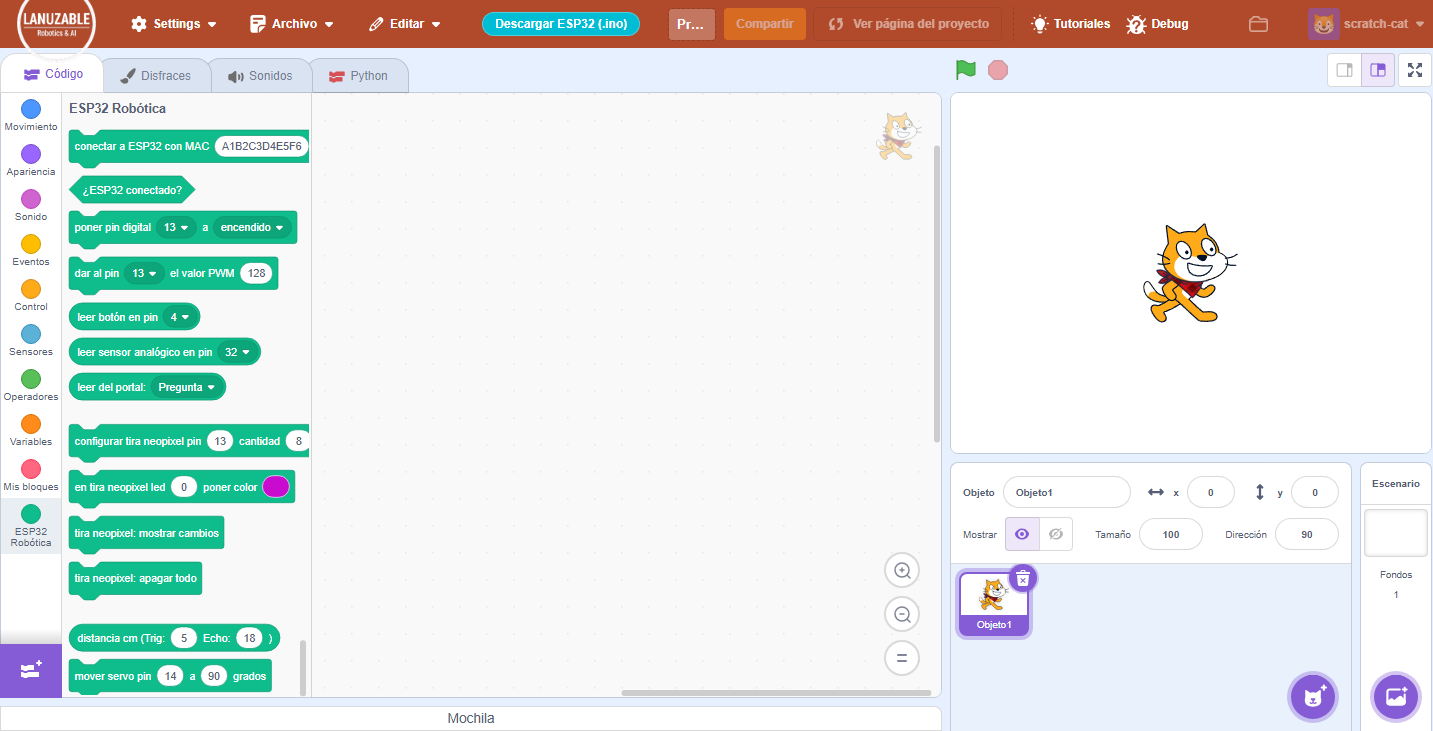
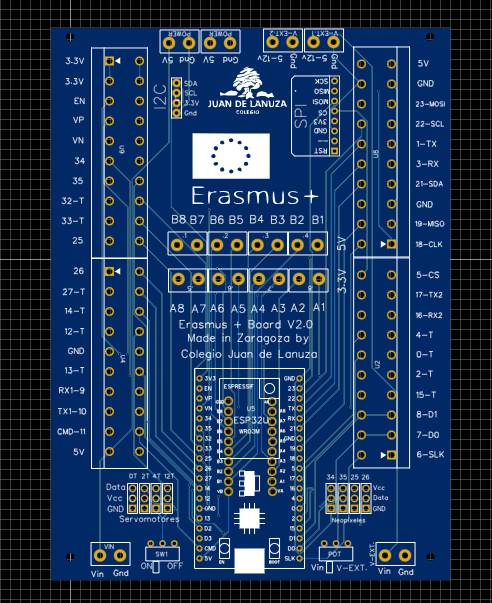
Erasmus+ Educational PCB Shield
Designed for direct, solderless plug-and-play connections with ESP32 microcontrollers, sensors, and servos.
MagicSTEAM's Public Service Mission
With the goal of closing the economic and technical gap faced by many educational institutions, alongside my colleague and friend Pepe Fernández, we are engineering MagicSTEAM: an open platform based on Scratch that integrates contemporary IoT and AI technologies in an accessible way.
The project was conceived with an uncompromising public service ethos: we want it shared, freely adopted, and collectively enriched by the global educator community, opening access to authentic hands-on engineering without paywalls or restrictive commercial licenses.
The Core Concept: Breaking the 4th Digital Wall
One of the foundational pillars is the native integration of ESP32 microcontrollers—affordable dual-core devices with Wi-Fi and Bluetooth connectivity—via custom visual Scratch blocks designed for zero configuration. This allows students to code on-screen while directly driving and responding to physical devices with no friction.
What does it mean to break the fourth digital wall?
Inspired by theatrical convention, this paradigm bridges the artificial divide between virtual logic and physical reality. Projects conceived on screen trigger immediate, tactile interactions in the physical room. Students transition from simulating virtual sensors to manipulating real-world hardware in an intuitive, tangible, and deeply meaningful manner.
To make this seamless, we designed a custom educational PCB shield that simplifies wiring, making physical computing accessible from early secondary school. We also integrated machine learning extensions, empowering students to train and deploy non-generative classification AI in hands-on projects.
Three-Tier Architecture
The architecture is powered by custom open firmware for the ESP32 that provisions an independent Wi-Fi access point and embedded web captive portal. Three synchronized tiers interact simultaneously:
Coding Environment
Scratch augmented with custom blocks for physical interaction, telemetry, and machine learning.
Physical Device
Erasmus+ PCB shield with ESP32 microcontroller, servomotors, pushbuttons, and touch sensors.
Communication Layer
Autonomous Wi-Fi AP and web configuration portal accessible from any tablet or mobile device.
From on-screen simulation to physical reality: «Defuse the Bomb»
A clear illustration of this paradigm stems from a common classroom challenge: programming a television quiz-game dynamic in Scratch where a team must "defuse a bomb" by answering trivia correctly.
In standard computer-only projects, answers correspond to on-screen colors. Choose the wrong button, and the cartoon bomb explodes; answer correctly, and the game proceeds. It’s fun, but trapped behind the glass monitor.
The question that sparked MagicSTEAM:
“Why settle for a digital simulation on a computer monitor?”
Our method maintains the visual Scratch logic but links it to a physical device on the desk. Students design the software, but they also build a tangible physical "bomb" with real wire circuits. When a student snips a physical colored wire, the ESP32 senses the circuit break and communicates it to Scratch in real time, triggering the explosion or defusal.
This establishes a bidirectional loop: screen to physical world, and physical world back to screen. Code ceases to be an abstract exercise and becomes an immersive, memorable experience.
Instant wireless configuration from any tablet:
Via the built-in web portal generated by the ESP32, teachers or peers can configure questions and answers on the fly from any smartphone or iPad. Updates apply instantly without having to re-code or touch the underlying Scratch scripts.
Key Pedagogical Benefits:
- Strengthens the conceptual bridge between computational logic and the physical world.
- Dramatically boosts student engagement through hands-on interaction with student-built devices.
- Introduces embedded systems, circuitry, and wireless protocols in an integrated, friendly format.
- Encourages peer collaboration and challenge-based active learning.
- Enables educators to replicate and adapt interactive lessons without technical barriers.
Interested in joining the MagicSTEAM community?
Get in touch to receive open educational resources, schematic diagrams, and classroom implementation guides.